
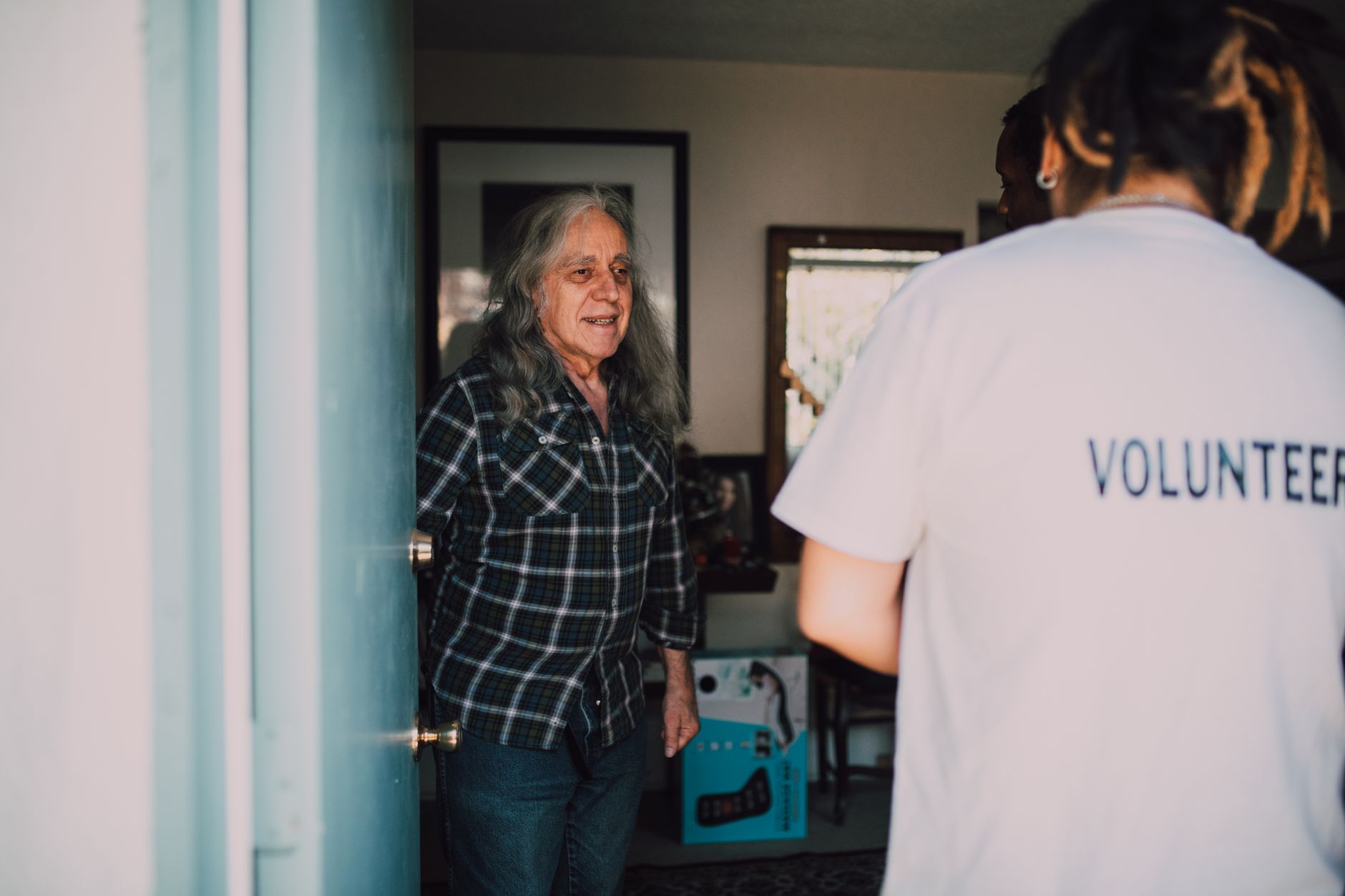
Care Home Befriender Volunteer UK: The Complete Guide to Visiting Residents
A care home befriender volunteer UK residents genuinely look forward to seeing is rarely a trained therapist — more often it is someone who turns up every Thursday at two o’clock with a newspaper and forty minutes of unhurried conversation. Roughly 400,000 people live in residential and nursing homes across Britain, and surveys by charities working in the sector repeatedly find that around a third receive no visitors from outside in a typical month. Befriending closes that gap. The commitment is usually one hour a week for a minimum of six months, the training runs to two or three sessions, and the only hard cost most schemes cover is a DBS check of around £18 to £21 for the enhanced level. This guide covers recruitment, screening, what a first visit actually looks like, and how befriending sits alongside the wider volunteering landscape in your area.
What a Care Home Befriender Actually Does
Befriending is one-to-one companionship, not care work. You will not lift, wash, medicate or feed anyone. A typical visit lasts 45 to 90 minutes and involves talking, reading aloud, looking through photographs, playing dominoes, or simply sitting in the garden while the resident dozes and wakes.
Most homes match you with one or two residents rather than letting you roam. Matching considers shared interests — gardening, football, a former trade, a home county. Managers report that consistency matters more than charisma: the same face at the same hour builds recognition even for residents living with moderate dementia.
The role also has a quiet safeguarding function. Because you see the same person weekly, you notice change: a new bruise, weight loss, a resident who has stopped finishing sentences. You report observations to the named staff contact, never to family directly, and the home decides what happens next.
Compare it with shift-based roles and the difference is clear. Someone learning how to volunteer at food bank sessions commits to a fixed rota and rarely meets the same client twice; a care home befriender volunteer UK schemes recruit is building one relationship over months, and that continuity is the entire product.
Applications, Vetting and Training
Applications go through either the home’s activities coordinator or a regional befriending charity. Expect an informal chat, two references, and an enhanced DBS check with the adult barred list. Turnaround is typically four to eight weeks from first email to first visit, longer if references are slow.
Training is lighter than people fear. Two sessions of roughly two hours each cover safeguarding adults, dementia awareness, infection control, confidentiality and lone-working. Some providers add a short module on bereavement. None of it requires prior care experience, and homes generally deliver it free rather than charging volunteers.
Screening standards mirror other trusted community roles. The vetting depth sits close to what applicants face when researching how to become a school governor, and above the light-touch induction used for retail shifts in the best charity shops in London. Adults at risk justify the extra scrutiny.
What the DBS Check Involves
An enhanced DBS with barred list costs the organisation around £21.50 plus an admin fee of £10 to £20 through an umbrella body; volunteers pay nothing. If you already hold a certificate on the Update Service, most homes will accept it, cutting weeks from the process.
Your First Six Visits
Visit one is short — 30 minutes, with the activities coordinator present for introductions. Bring nothing except yourself. Ask the staff beforehand about hearing aids, eyesight, swallowing difficulties and preferred name. Sitting at eye level rather than standing over a chair changes the dynamic more than any conversation starter.
By visit three you will have found a rhythm. Props help: a local newspaper, an OS map of the area they grew up in, seed catalogues, a tablet loaded with archive footage. Costs stay small — expect to spend £3 to £8 a month if you bring anything at all.
Boundaries protect both sides. Do not give your home address, lend money, transport residents in your car, or accept gifts above token value. If a resident asks you to contact their family or solicitor, route it through the manager. Write two lines in the visit log every time.
Activities That Reliably Work
Keep it low-effort and repeatable. Anything requiring setup, cleanup or staff assistance will quietly stop happening by week five. These options cost under £10 and work with limited mobility, poor hearing or moderate cognitive impairment. Ask staff which of them the resident already enjoys before you buy anything.
- Reading the local paper aloud, including the deaths and planning notices residents still care about
- Hand massage with unscented cream, useful on days when conversation is difficult
- Sorting loose photographs into an album, with names and dates written on the back
- Dominoes, draughts or a card game using large-print cards
- Playing music from the years the resident was aged 15 to 25
- Writing letters or postcards to relatives on the resident’s behalf
Time, Money and Realistic Commitment
Time is the real currency. Schemes ask for one hour a week over six to twelve months, which totals roughly 30 to 50 hours a year. That is less than most committee roles and far less than the year-round planning behind a summer event, but it is far more consistent.
Out-of-pocket costs should be near zero. Reputable schemes reimburse mileage at 45p per mile and bus fares against receipts. If a home refuses expenses entirely, treat that as a warning sign about how it values volunteers generally, and speak to the manager before you commit.
For groups running their own scheme, overheads change. Renting space for volunteer training pushes village hall hire cost UK organisers face into the equation, typically £10 to £25 an hour. Anyone weighing how to set up a charity for befriending should budget for insurance, DBS admin and a coordinator’s time.
| Item | Typical figure | Who pays |
|---|---|---|
| Weekly visit | 1 hour, same day each week | Volunteer time |
| Minimum commitment | 6 to 12 months | Volunteer time |
| Enhanced DBS check | £21.50 plus £10 to £20 admin | Scheme or home |
| Induction training | 4 to 6 hours across two sessions | Scheme or home |
| Travel | 45p per mile or bus fare | Reimbursed on receipt |
| Props and small treats | £3 to £8 per month | Volunteer, optional |
Where Befriending Fits in Local Community Life
Befriending rarely stays an isolated activity. Volunteers drift into adjacent projects, and the same names appear on every rota. Village noticeboards carry a predictable set of queries — neighbourhood watch scheme how to start, how to run a village fete, and whether the school needs readers — and befrienders answer most of them.
Starting a community garden UK residents can actually reach — raised beds at 70cm, wide paths, a tap within ten metres — gives non-verbal residents something to do with their hands. Budget £400 to £900 for four beds, compost and basic tools, and recruit two people who will water in August.
Local governance matters too. Homes sit inside parishes, and parish council meeting rules UK volunteers can use — public participation slots, three clear days notice of agendas — let befrienders raise dropped kerbs, bus stops and bench placement. Ten minutes at a meeting can outperform a year of complaints.
Practical overlaps keep appearing. Families clearing a wardrobe after a death ask about donating clothes to charity UK shops will accept; kitchen staff want a plain-English note on community fridge how it works; and residents with relatives in hardship ask how the UK food bank referral process works through a GP, health visitor or housing officer.
The pattern is consistent: a care home befriender volunteer UK homes trust becomes a bridge between an institution and its street. That bridging role, not the tea and biscuits, is why managers guard good befrienders and why waiting lists for placements move slowly in popular areas.
How Do I Become a Care Home Befriender in the UK?
Start with the homes closest to you rather than a national portal. Call and ask for the activities coordinator, say you want one hour a week, and ask whether they run a befriending scheme or work with a local charity. Expect an informal meeting, a short application form, two references and an enhanced DBS check. Training follows, usually four to six hours across two sessions covering safeguarding, dementia awareness and confidentiality. Most applicants become a care home befriender volunteer UK schemes can place within six to eight weeks. If the first home has no vacancy, ask to be added to its waiting list.
Is Befriending Suitable for People With No Care Experience or Under 18?
Yes on experience, conditionally on age. Schemes deliberately recruit people with no clinical background because the role is social, not medical; retired teachers, students, shift workers and parents on school runs all fit. On age, most homes set a minimum of 16 or 18. Under-18s usually visit in pairs, with a supervising adult on site and parental consent, and cannot hold lone-working responsibility. Sixth-form and university placements often run as group programmes lasting a term. What matters far more than experience is reliability: cancelling repeatedly damages a resident who has been watching the door since breakfast.
What Happens When the Resident I Visit Dies?
Bereavement is part of the role, and good schemes prepare you for it. The home should tell you promptly rather than letting you arrive to an empty chair; ask during induction how notification works and who makes the call. You may be invited to the funeral, and many homes hold a short memorial for staff, volunteers and residents. Take a break if you need one — two or three weeks is normal — and ask your coordinator for a debrief. Most volunteers return to a new match afterwards, and coordinators expect that pattern rather than treating it as any kind of failure.