

Donating clothes to charity UK high streets depend on keeps hundreds of thousands of tonnes of textiles in circulation every year, yet most bags left at a shop door earn far less than they could. Donating clothes to charity UK shops can resell at full price starts with understanding what happens after the handover: triage, grading, Gift Aid processing and, for anything unsellable, a rag trade paying roughly £300 to £500 per tonne. One carrier bag of clean, in-season, mid-market clothing (Boden, Joules, White Stuff, Levi’s) can raise £25 to £60 for a branch, while the same bag of bobbled fast fashion raises around 40p. This guide covers grading, Gift Aid, collection options, volunteering routes and how a bag of jumpers connects to the wider community infrastructure most British towns already have in place.
What Happens to Your Bag After You Hand It Over
Behind the counter, donations are triaged fast. A shop with limited rail space keeps only what will sell within four weeks, so items are split into shop stock, transfer stock for a sister branch, online listings for premium labels, and textile recycling. That triage usually happens the same day the bag arrives.
Anything that cannot be sold on the rail is baled and sold to textile merchants by weight. The rag rate moves with global demand but sits broadly between £300 and £500 per tonne, which works out at roughly 30p to 50p per kilogram of mixed clothing once handling is deducted.
Location changes the maths dramatically. The best charity shops in London for stock quality, such as Mary’s Living and Giving in Primrose Hill, Oxfam Marylebone or the FARA boutiques around Chelsea, routinely price a wool coat at £45 because their catchment supports it, while an identical coat in a small market town might sit at £12.
Grades, rag rate and why condition decides the price
Grading is blunt. Grade A means clean, current-season and no visible wear; Grade B carries minor bobbling or a missing button; Grade C is rag. A £3 dry clean on a cashmere jumper can lift it two grades and add £25 to the till, which is why condition beats brand name almost every single time.
Preparing a Donation So It Earns Its Full Value
Wash everything. Volunteers cannot launder donations, and one damp towel will contaminate an entire bag within a day. Fold rather than stuff, use a bag you do not need back, and separate shoes into their own carrier so they do not scuff the fabric packed around them.
Sign up for Gift Aid on your first visit. As a UK taxpayer you let the charity reclaim 25p for every pound your items raise, at no cost to you. Registration takes three minutes, generates a donor reference number, and most chains then text or email you the final sale total.
| Item | Typical shop price | Gift Aid uplift |
|---|---|---|
| Wool coat, known high-street label | £18 to £45 | £4.50 to £11.25 |
| Men’s suit, freshly dry cleaned | £20 to £40 | £5 to £10 |
| Levi’s 501 jeans | £8 to £15 | £2 to £3.75 |
| Waterproof children’s coat | £6 to £12 | £1.50 to £3 |
| Branded leather handbag | £15 to £60 | £3.75 to £15 |
| Bobbled fast-fashion T-shirt | 40p as rag | Negligible |
Timing matters as much as quality. Shops put winter coats out from late September and swimwear from April, so a February delivery of beachwear goes straight into storage or the rag bale. Ring ahead in December, because back rooms fill within hours and many branches pause intake completely.
Community Hubs: Where Clothes Go Beyond the High Street
Not every garment belongs on a rail. Refuges, food banks and community hubs need specific items, such as interview outfits, school uniform and warm adult layers, and they will tell you exactly what they are short of if you ask before arriving with six bin sacks.
If you already support a local hub, the UK food bank referral process is worth learning: clients are referred by a GP, school, health visitor or council team, receive a voucher, then collect a parcel covering three days of meals. Clothing is often handed out informally alongside that parcel at the same session.
The community fridge how it works explainer pinned to most hub noticeboards runs to a single paragraph. Surplus stock from supermarkets, bakeries and allotments is chilled in a publicly accessible unit, anyone may take what they need, and no referral is required. Clothing rails frequently sit beside those fridges for the same reason: dignity, and no paperwork.
Clothing banks, doorstep bags and bogus collectors
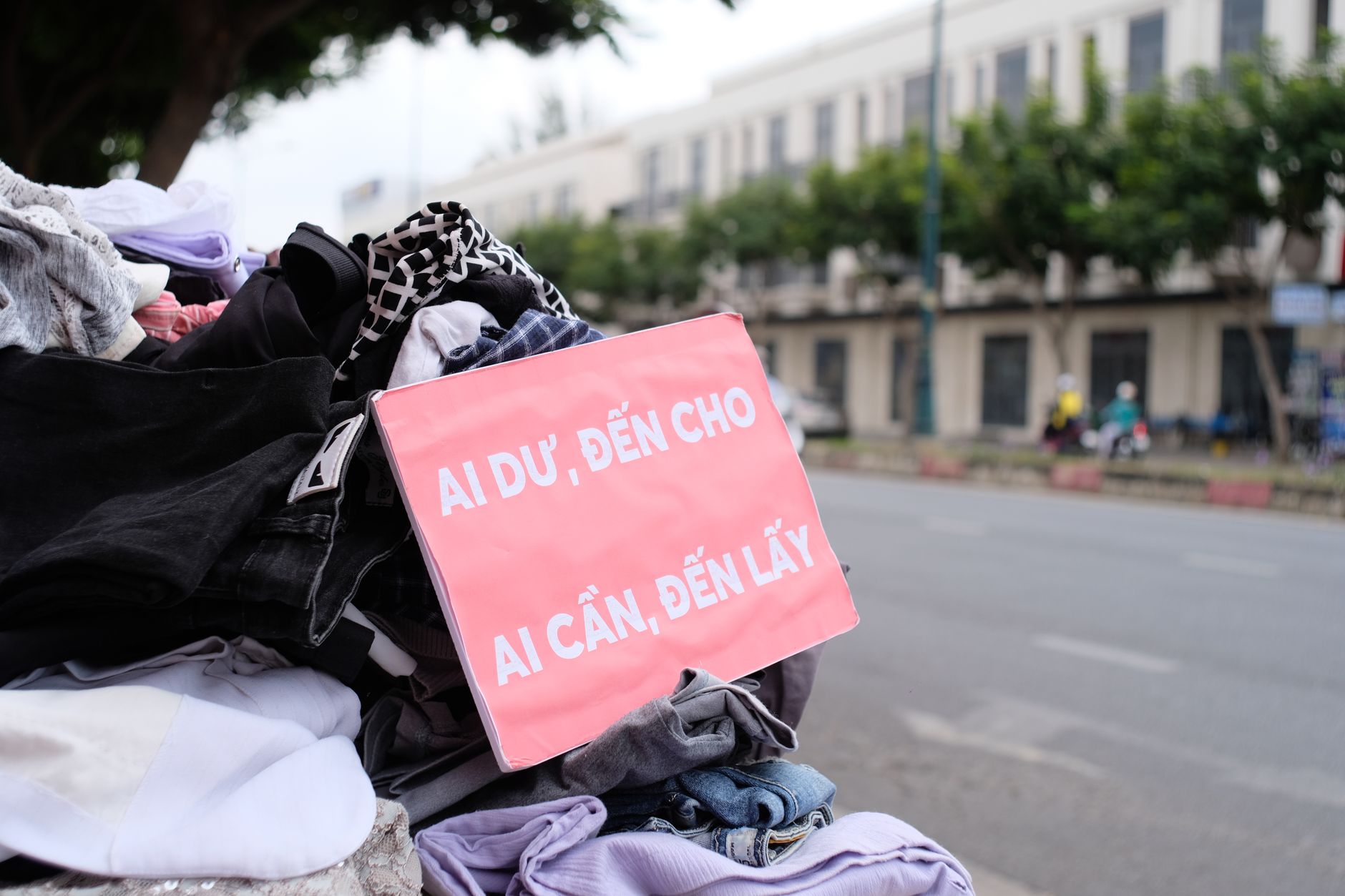
Doorstep collection bags are a mixed picture. Genuine ones carry a registered charity number and a stated payment per tonne, while some commercial operators pass on as little as five percent. Check the number against the Charity Commission register before leaving a bag out, and photograph the leaflet for reference.
Turning a Donation Into Regular Volunteering
Donors make excellent volunteers because they already know the stock. Most shops ask for four hours a week as a minimum, offer till training within a month, and reimburse travel expenses. The charity shop volunteer age limit is typically 14 for back-room sorting and 16 for handling cash or working a shift alone.
Beyond the rail, the same two-hour slot travels a long way. Anyone asking how to volunteer at food bank warehouses can apply through the national network or an independent hub directly. Roles cover date-checking, parcel packing, van driving and the welcome desk, with a DBS check required for client-facing positions.
Local roles that suit former donors include:
- Charity shop floor, steaming and window dressing, around four hours weekly
- Food bank warehouse sorting, date-checking and parcel packing
- School governance, where how to become a school governor begins with an application to the clerk, followed by a four-year term of roughly six meetings a year
- Street coordinator, using the neighbourhood watch scheme how to start pack that covers minimum household numbers, data handling and police liaison
- Community fridge stock rota, usually one 90-minute collection run per fortnight
Running Your Own Clothing Collection Locally
A one-day collection outperforms a permanent bin in most villages. Book a hall, publicise it for a fortnight, accept clean clothing only, and hand the sorted bales to a named charity. The village hall hire cost UK committees quote sits around £8 to £20 an hour, frequently waived for registered causes.
Committees that know how to run a village fete already own the infrastructure: gazebos, a float, public liability insurance and an active volunteer WhatsApp group. Bolt a clothing rail onto the fete rather than building a separate event, and expect three to five bin bags of donations per hundred visitors on a dry Saturday.
Land and permissions come through the same route. Parish council meeting rules UK legislation sets out require agendas published three clear days ahead plus a public participation slot, so book five minutes and bring one page. Starting a community garden UK parishes will support follows the identical path, and gardens attract steady footfall for collections.
Formalising is a larger step. How to set up a charity depends on income: below £5,000 a year you can run as an unregistered association with a constitution and a bank account, while above that you register with the Charity Commission and appoint at least three unrelated trustees. Donating clothes to charity UK groups run locally keeps the money in your parish.
How Do I Arrange a Free Collection for Large Clothing Donations?
Most national chains collect free above a minimum volume. The British Heart Foundation takes furniture and bulk clothing with a booked van slot, usually within ten working days, and Sue Ryder, Barnardo’s and many independent hospices run comparable services. Book online, describe roughly what you have, and expect a two-hour arrival window. For smaller loads, freepost postal labels offered by several charities let you send up to 20kg in your own box at no cost. If you are clearing a house, ring the shop manager directly first, because they will often send two volunteers the same week rather than lose good stock to a commercial clearance firm.
Is Donating Clothes to Charity UK Shops Better Than Selling Them Online?
It depends entirely on your time. A Levi’s jacket might fetch £35 on a resale app against £14 in a shop, but you absorb photography, messaging, packing, a trip to the drop-off point and buyer-protection deductions. Resale realistically pays only for identifiable labels priced above roughly £20. For everything else, donating clothes to charity UK branches accept is faster, and with Gift Aid adding 25 percent the charity keeps more than the price gap. A practical split works best: list the ten highest-value pieces yourself, then donate the remainder in one clean bag. That combination usually nets more and clears the wardrobe in an afternoon rather than six weeks.
What Should I Do With Clothes That Are Too Damaged to Sell?
Nothing textile needs to reach landfill. Torn, stained or odd items still hold value as industrial wipers, insulation fibre and shoddy for mattress filling, so bag them separately, label the bag as rags, and use a textile bank rather than the shop doorway, since mixing rag with sellable stock costs volunteers hours of sorting. Bras go to specialist reuse schemes, worn-out trainers to sports-brand takeback bins, and duvets and pillows to animal rescues, which accept them all year round. Anything genuinely contaminated by mould, oil or bodily fluids belongs in general waste, because one item can write off an entire bale.